The name on the banner
About Ruby
101 years young. Sharp as ever. Do not let her deal the cards.
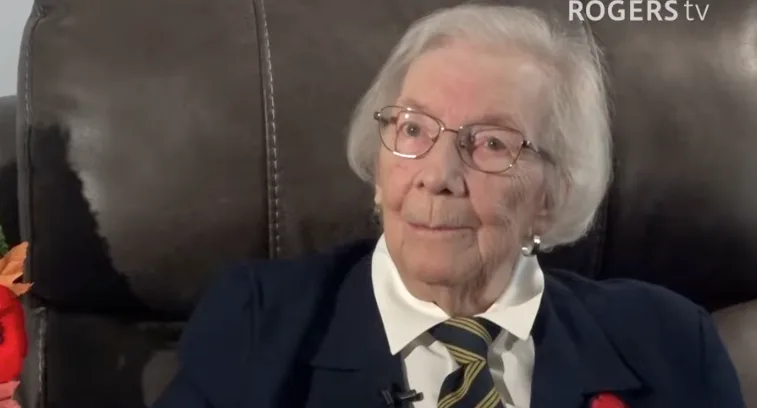
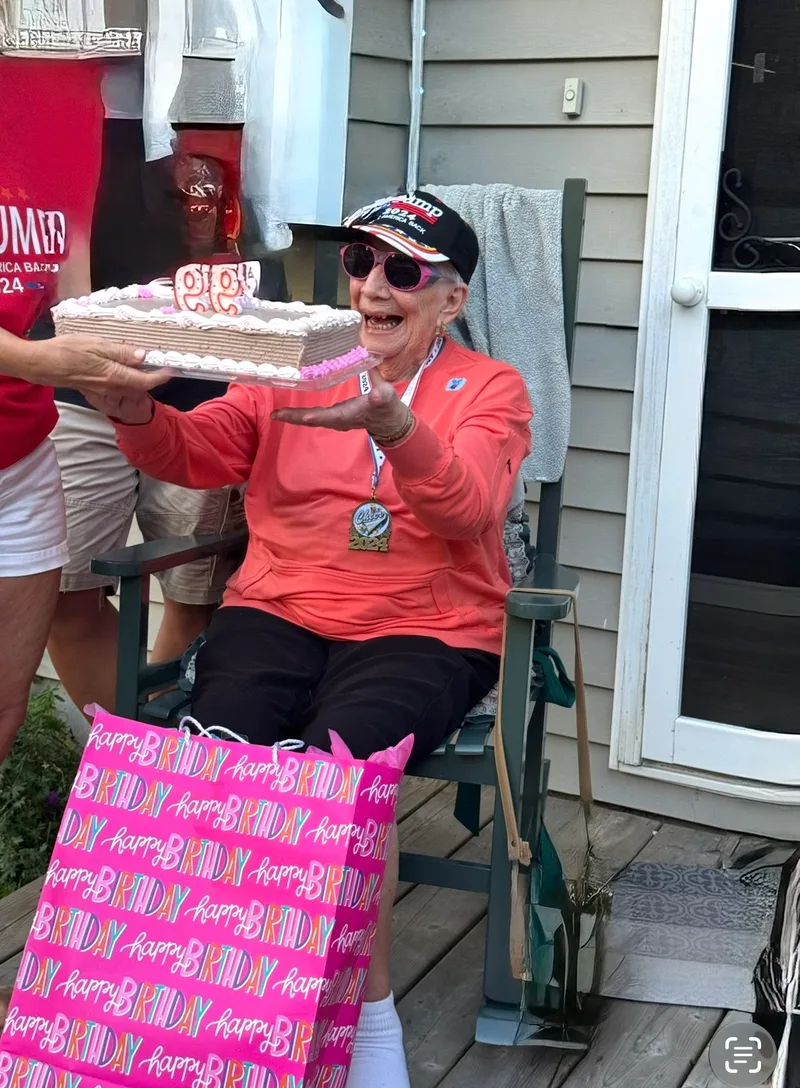
Ruby Somers was born in Newcastle in 1925, one of a big river-town family, schooled at St. Mary's. She is 101 now, very much here, and still the one whose kitchen everyone ends up in and whose opinion settles arguments. If you think her age is the headline, keep reading.
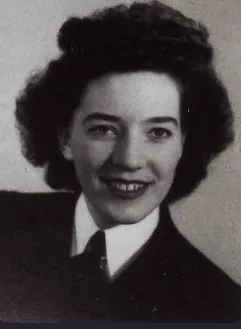
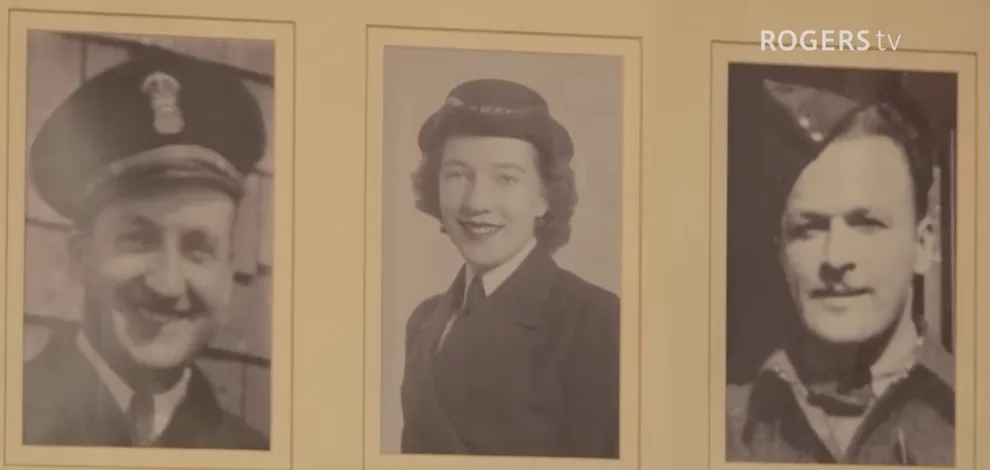
In 1943 she was waitressing in Saint John when a recruitment ad for the Wrens, the Women's Royal Canadian Naval Service, caught her eye. 'It showed this little Wren and I thought, Oh, that's what I want to be.' The recruiter told the seventeen-and-a-half-year-old to come back at eighteen. She did, making her the fourth of the siblings in uniform; three brothers were already serving. Her family stood crying on the station platform. 'It was quite a farewell,' she says, and she will tell you plainly why she went anyway: 'I was very patriotic. I don't know what people thought. I just knew what I wanted.' Years later the Miramichi Weekend gave the family a full community page under the headline 'Siblings served together in the navy during WWII.' It hangs framed on her wall, the brothers and the Wren all in uniform on one page.
The train to basic training at HMCS Conestoga in Galt, Ontario was the farthest she had ever been from home, and she boarded it knowing nobody. One seat was left, beside a girl named Betty from Antigonish, Nova Scotia. 'We became best friends.' They finished basic together, were posted together to HMCS Cornwallis, and when a notice went up seeking volunteers to serve in Newfoundland, a foreign country in those days, they looked at each other and said: 'That's for us.'
Wrens served onshore so more men could serve at sea: clerical work, and cleaning ships to a standard with no slack in it. 'If they found a spot they'd tip the bucket right over and you'd have to do it all over again.' The crossing to St. John's was two rough days through U-boat waters and she was seasick the whole way; the posting, HMCS Avalon, she loved. The drill, the parade ground, a borrowed bicycle and a picnic above the battery on days off. Then one 1945 morning: 'Oh what a day that was. I looked out the window and I didn't know what all the fuss was about. The sailors and Wrens were walking up and down with big balloons flying.' The war was over.
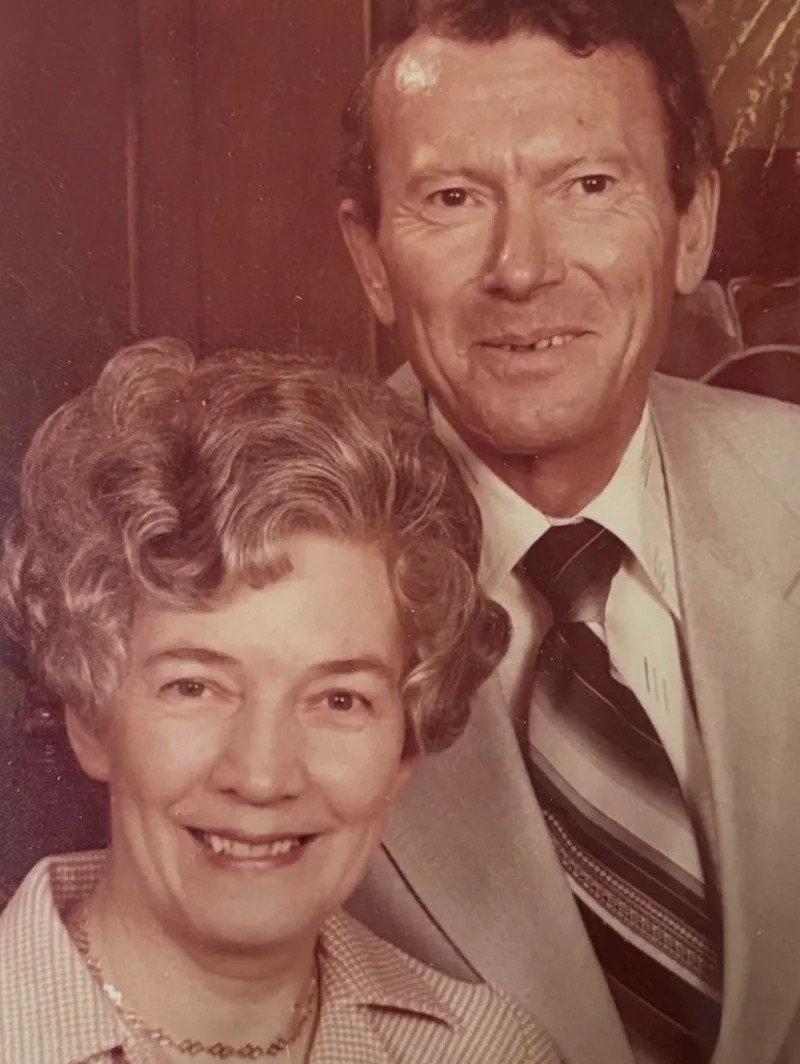
Millar had spent those years with the army in Germany. In 1946 she found his name in the newspaper on the list of a ship coming home, and she was on the platform when his train pulled in. He stepped off, took her hand, and held it tight. One October Sunday in 1943 she had written home from Galt: 'Please write often. Loads of love to you both... your loving daughter, Ruby.' Three years to the day after that letter, on October 23, 1946, she married Millar Somers, in a dress she had bought with her service pay to wear to a dance. Years later her oldest daughter, Judy, was married in the same dress.
They started in a log cabin Millar built at Black River, ran a convenience store and restaurant in Douglastown, raised seven children, and moved twenty times without ever leaving the Miramichi. When Judy died far too young, Ruby raised her three boys as her own. Ten kids raised, one river kept. She gave the Legion's Ladies Auxiliary decades of banquets, parades, and Remembrance Days; Branch 10's president put it simply: 'She volunteered for just about anything we would need her for.' In 1995 she went overseas once more, for the 50th anniversary of the liberation of Holland. Her medals hang mounted at home, a gift from one of her daughters; she cried when she opened them. Among the family keepsakes: a 1944 tribute to the Merchant Marine, kept all these years with her brothers' things.
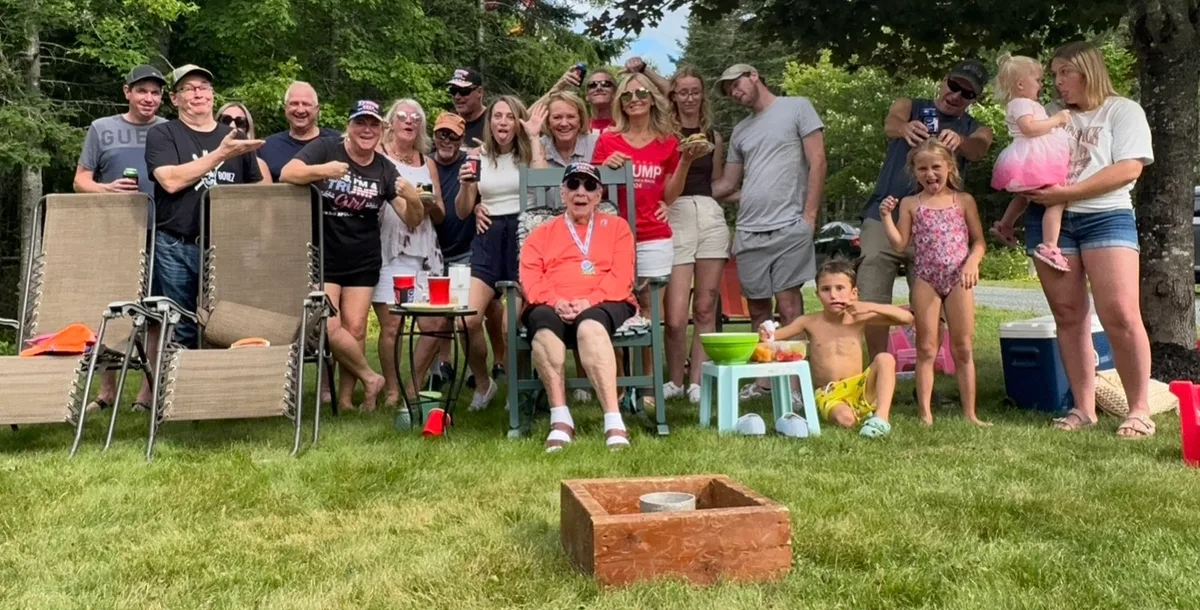
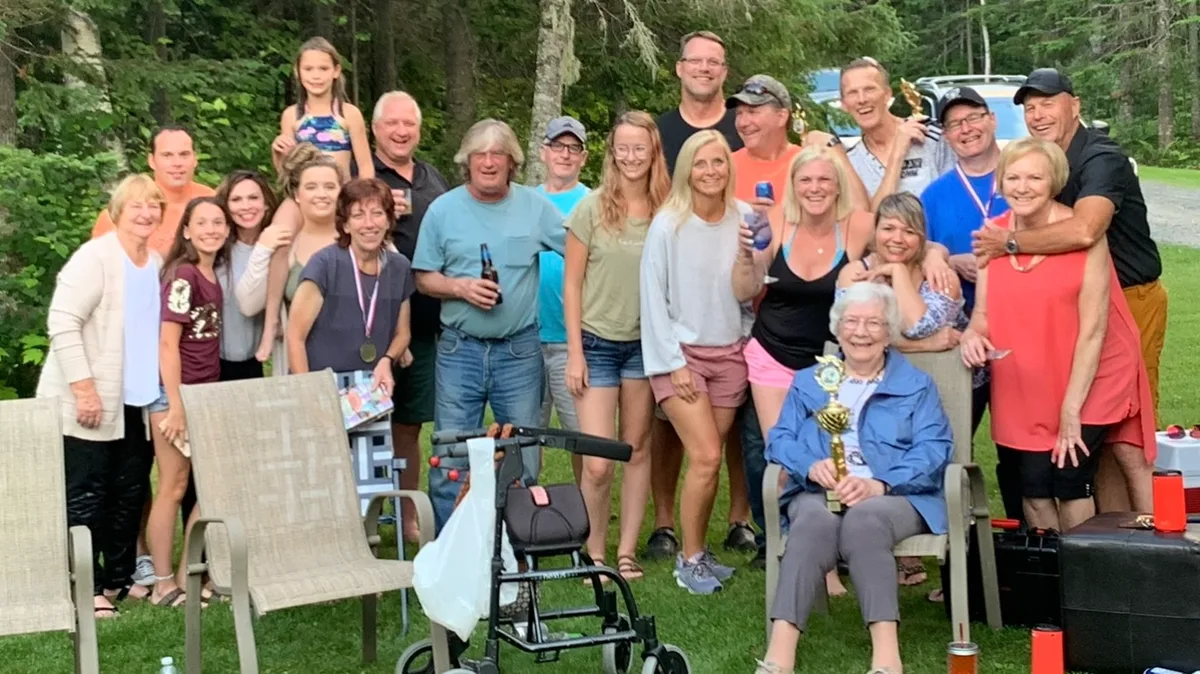
Her children were amazed as they pieced together their mother's part in the war; one daughter retraced her postings step by step, and told the Miramichi Leader, which put Ruby on its front page at 95: 'She's our hero. To think that my mother was part of the Second World War and so brave, it's wonderful. We're proud.' Asked whether she ever regretted enlisting: 'Never. I'm so proud to think that I went.' That is the woman this tournament is named for. For seven summers her family's August washer toss day has been the loudest afternoon on the river; in 2027 the gates open to everyone. Ruby throws the first washer and hands the Ruby Cup to the champions. Win it, and your name goes up beside hers.
Service record
- Born
- Newcastle, NB · 1925
- Service
- Women's Royal Canadian Naval Service (the Wrens), 1943 to 1945
- Training
- HMCS Conestoga · Galt, Ontario
- Posted
- HMCS Cornwallis · Nova Scotia
- Overseas
- HMCS Avalon · St. John's, Newfoundland
- Home
- The Miramichi, 1945, for good
“Never. I'm so proud to think that I went.”
The family album
Seven summers and a century
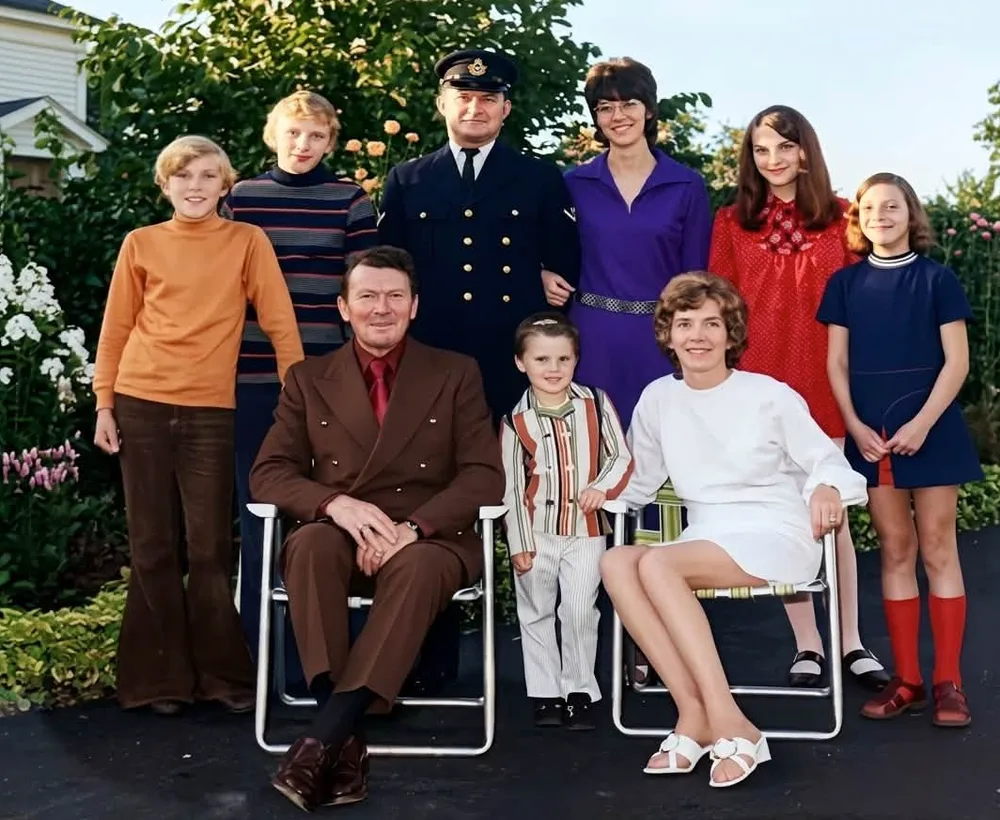
A few pages from the album: the family day that became this tournament, and the woman it is all named for.
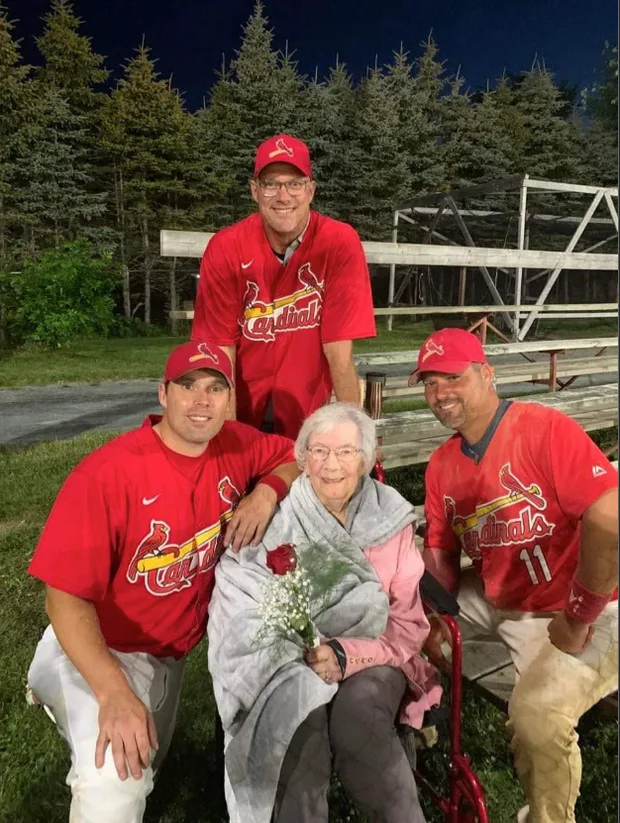
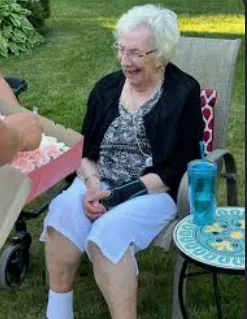
Played for. Remembered always.
The six we carry with us
Our family day has always been played for the ones who left this earth far too early. Their names are on the badge: Judy, Ruby's oldest daughter, married in her mother's wedding dress; Millar, the soldier who stepped off the train in 1946 and took her hand; and the loved ones gone between. Every August they are with us on the lanes.
- Judy
- Van
- George
- Terry
- Michaela
- Millar
The Classic keeps that tradition. The first toss of the day is thrown for them.

What the day stands for
House values
The mission, in the plain terms Ruby would use:
Family first
Started by the family, run by the family, celebrating the matriarch while she can heckle us from the front row. Which she will.
Fun and competition, blended right
Seven years of family play taught us the recipe: laugh the whole day, keep score anyway, shake hands after. Both things are true at once.
Community fun day
This is Miramichi's day now too. Local sponsors, local vendors, local bragging rights, and the money stays on the river.